



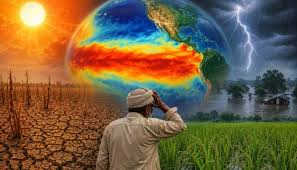
The World Meteorological Organization (WMO) has issued a critical global climate advisory, confirming with an 80% to 90% certainty that a powerful El Niño event is rapidly developing in the tropical Pacific Ocean and will dominate global weather patterns through the remainder of the year. Driven by unusually high ocean surface temperatures in the central and eastern equatorial Pacific, this atmospheric shift is projected to trigger severe, compounding environmental hazards across multiple continents. UN Secretary-General António Guterres urgently warned that the arriving El Niño will “pour fuel on the fire of a warming world,” urging international leaders to immediately accelerate climate action, transition away from fossil fuels, and deploy life-saving early warning systems. Meteorological models predict near-universal, above-normal temperatures globally between June and August, drastically escalating the risks of severe heat stress, historic droughts, and wildfires in vulnerable regions. South Asia is braced for a heavily depleted monsoon season with below-average rainfall, while the Greater Horn of Africa faces a severe risk of prolonged drought across its critical agricultural zones. Conversely, while El Niño typically suppresses hurricane development in the Atlantic basin, it is expected to fuel a highly volatile and destructive hurricane season in the central and eastern Pacific Ocean. Climatologists stress that while climate change does not increase the frequency of El Niño itself, the overarching global warming trend significantly amplifies its destructive capacity, loading the atmosphere with unprecedented levels of moisture and thermal energy. As emergency management agencies worldwide rush to fortify agricultural infrastructure and secure regional water supplies, the WMO is emphasizing that advanced predictive forecasting must be utilized to protect civilian livelihoods before cascading weather extremes trigger widespread humanitarian and economic crises.